How to control overtime before it shows up on payroll
Most overtime is not decided. It accumulates: a shift added on Thursday, a swap on Friday, a late clock-out on Saturday, and by payday someone has worked 46 hours at time and a half. By then it is too late to do anything but pay it.
Controlling overtime means seeing it at the three moments you can still change it: when you build the schedule, when the schedule changes, and while the week is happening.
Know the rule you are working to
Under the federal Fair Labor Standards Act, non-exempt employees earn at least one and a half times their regular rate for hours over 40 in a workweek. Some states add their own rules, such as daily overtime after a set number of hours in a day. Write down which rules apply to you, and what your workweek is (which day it starts), before anything else.
Overtime rules depend on your state and on each employee's classification. Check with your state labour department or an employment adviser if you are unsure.
1. Put a weekly limit on every person
Give each employee a maximum number of scheduled hours per week, usually 40 for full-time hourly staff and lower for part-time. A limit you can see while you schedule turns overtime from a surprise into a decision.
2. Watch hours while you build the schedule
Build the week with each person's total hours next to their limit. If someone is at 38 hours with an extra shift to fill, give it to someone at 24 instead. This single habit removes most avoidable overtime.
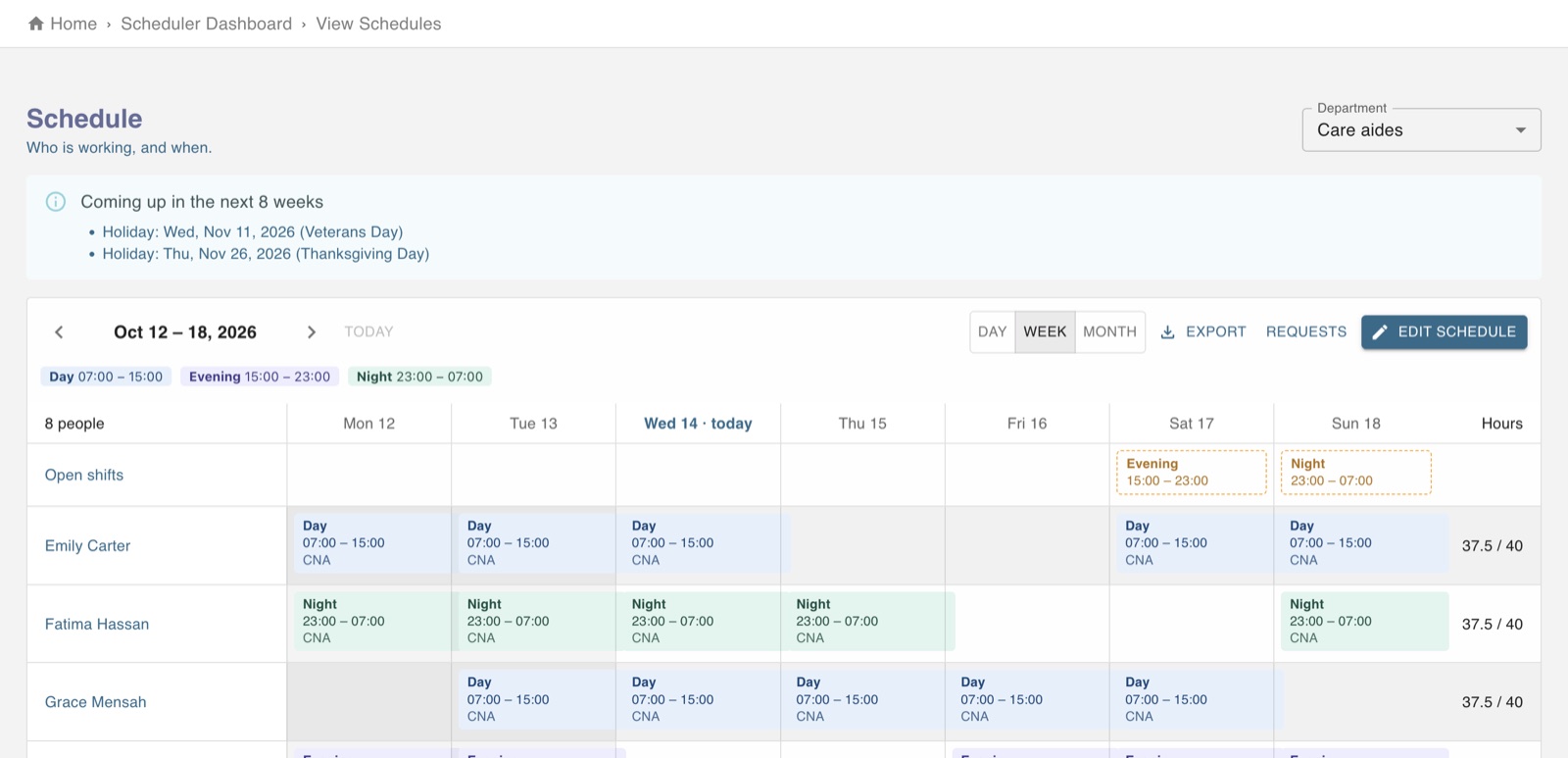
3. Approve swaps and open shifts with hours in view
Shift swaps and open shifts are where a careful schedule goes over. Require a manager's approval for both, and check the person's hours for the week before saying yes. A swap between two people on the same number of hours is harmless; a pickup by someone already at 40 is not.
4. Close the gap between the schedule and the clock
Scheduled hours are not worked hours. Early clock-ins, late clock-outs and skipped breaks add up. Use rounding and break rules consistently, compare punches with shifts every day, and close forgotten clock-outs automatically so one open punch does not become twelve paid hours.
5. Review overtime weekly, by department
Once a week, look at overtime by department and by person over the last four weeks. Repeated overtime in one department usually means it is understaffed, not that people are careless, and that is a hiring conversation, not a scheduling one.
A weekly routine
- Monday: build next week with hours against each limit.
- Daily: check late, early and missing punches against the schedule.
- Any swap or pickup: approve with the person's weekly hours in view.
- End of week: review overtime by department and person.
See hours against limits while you schedule
Worktrim shows each person's weekly hours on the schedule, routes swaps and open shifts through approval, and reports overtime by department, on the Basic plan, free for 30 days.
Start free trial → See scheduling